The most popular genre for LARP games is fantasy, often high fantasy. SF games do exist, but these are much rarer. The aim for Solar Stories is that it develops into a fully-fledged setting for table-top RPGs and LARP. When I think about the tabletop side of things, SF isn’t that different from fantasy. We can use maps, diagrams and plans to work where things are and give players a sense of geography. LARP is different because the players have to act within the game environment.
Playing in the environment is challenging as I don’t know anyone with a spaceship. I do have a few ideas.
Accept that not everything can be recreated.
It’s true in fantasy larp, and it’s true for science fiction players as well. Not all environments can be created. Generally, you cannot create that enormous ancient stronghold in a fantasy game or show dragons flying about. That doesn’t stop anyone from having fun. If it can’t be created physically, it can be created in the players’ minds, and you can reference it. Fantasy players have been doing this for a long time.
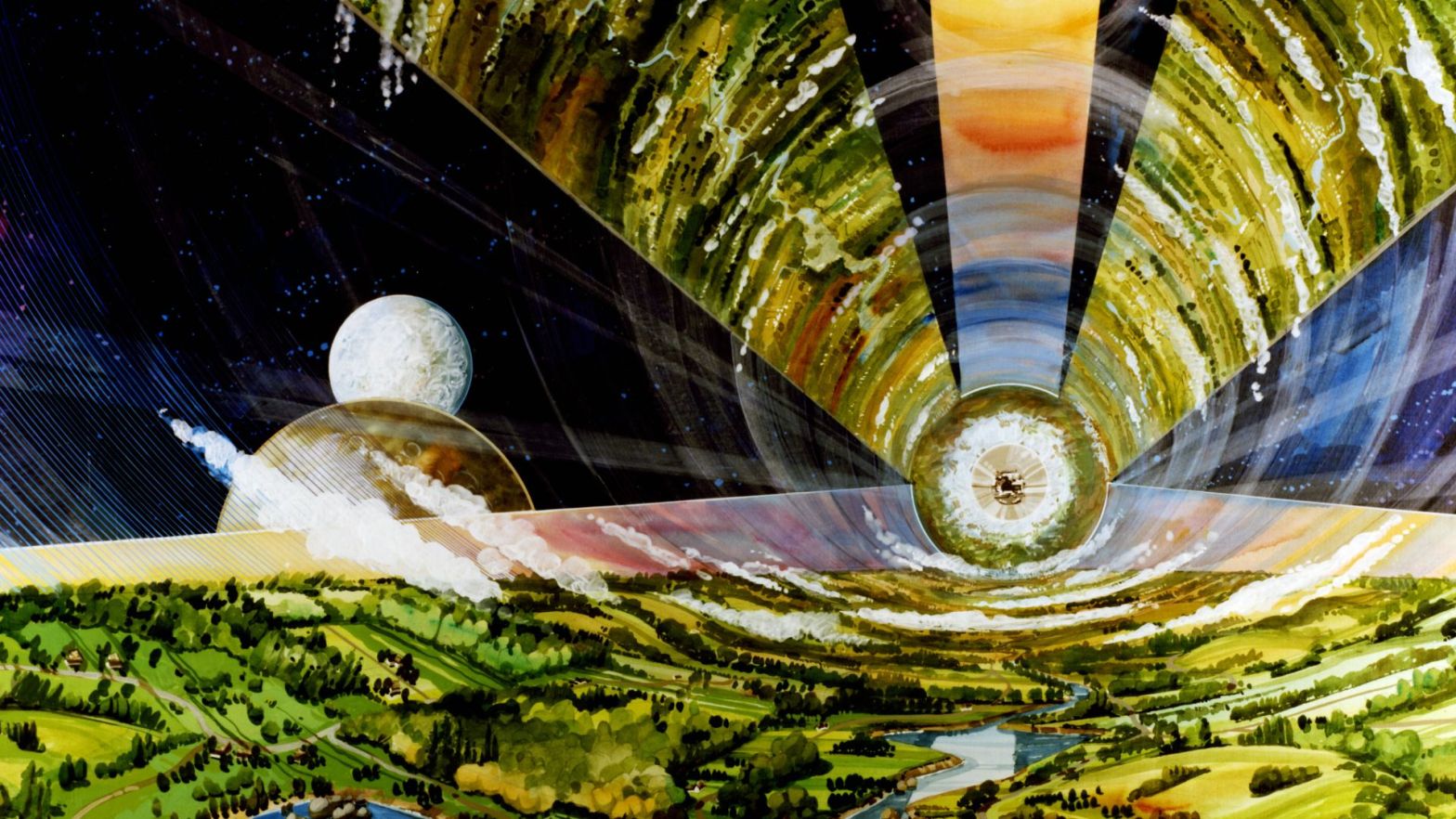
So can SF players. Take rotating O’Neil-style space colonies. You can’t create the upward curve of the ground that sweeps up so that you don’t see the sky but the ground above you when you look up.
Planetary Surfaces are just places.
Get the action onto a planetary surface, especially a rural SF location, and all the problems disappear. A forest is a forest, regardless of the genre. Take a look at the range of shows shot in Canada. A good location is a good location.
How Does this work in Solar Stories?
Solar Stories sweeps across the solar system; it’s not all metallic corridors, for example.
- Earth – Many different countries, cultures and places to include
- Man-Made Space Colonies – A good many of these are vast and include buildings, towns, farms, fields and forests on their inside surfaces
- The Caverns of … – Huge and ancient open spaces to keep the colonists sane. Existing on Mars and many great colonies built into asteroids under the moons of gas giants.
Spaceships are just Buildings.
Any manned spacecraft is nothing more than an enclosed space. Just like a building. Admittedly the more immersive generating staging you can do to help player imagination, the better. However, the truth is that a spaceship is something you need to stay inside of and that buildings are good at that does not change.
So are Small Space Colonies
If your space colony is nothing more than rooms hacked into rock, a cluster of connected modules or somewhere that cannot be easily left, then once more, a good building is an easy stand-in.
Anywhere can be Anywhere.
If we imagine a future society using virtual spaces, just as we are starting to do, then anywhere can be anywhere. If you’re in a spacecraft or tight colony, using virtual reality would make sense as an escape from the confinement. Adventures set in VR are a well-worn trope. There is no reason why larp should not make use of it.
Tents are surprisingly useful.
In an SF setting, why think about tents? Well, here are some ideas.
- In a breathable atmosphere, a tent is still a place to live. If the story is set away from civilisation, then tents are still valid.
- Sometimes, for example, creating quick housing in a refugee crisis is necessary. Tents work
- Need an emergency shelter on an airless asteroid? A tent could be a good stand-in for just such a thing,
- Need a small cramped space capsule? A tent could do that.
Costume Maketh the Immersion
When all else fails, remember that good costumes and props make a huge difference in making the game feel believable. Aim for the highest standard of costume that you feel is practical. Good props should never be underestimated. Having something tangible in hand that looks like it should be in the game universe always works better than having nothing at all.
Image Reference
https://space.nss.org/settlement/nasa/70sArtHiRes/70sArt/art.html
NASA Ames Research Centre.


 Stream of Consciousness