Photos From a Grand Opening

It’s time for a quick detour into photo land. I’m writing about how I’m trying to further develop my photographic style. Which I’m hoping in turn will have a positive impact when I’m talking about all matters visual. Even so the writing here and photography seem separate, they are not. Everything influences everything else

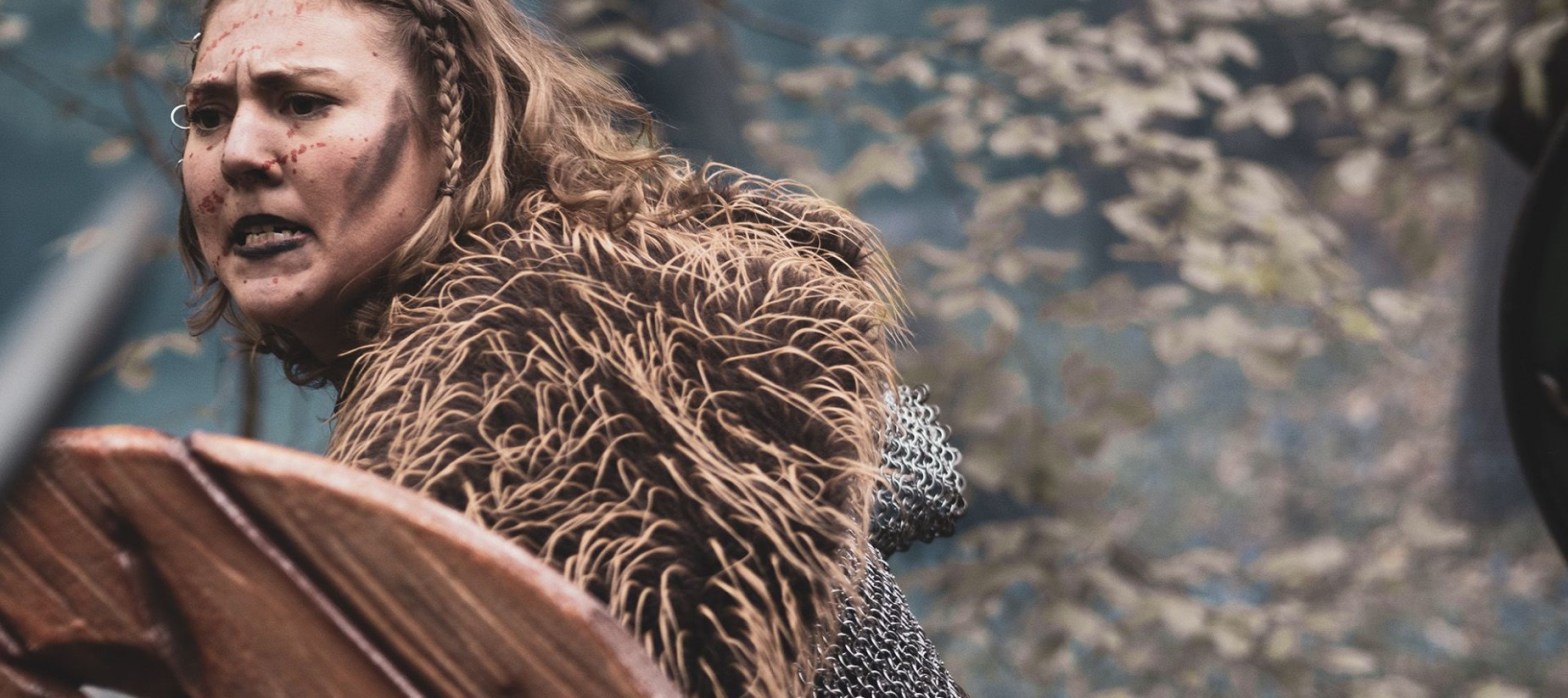
The album these thoughts come from is the Grand Opening of the permanent home of the Crimson Moon. An event bar that has plied its trade of offering a bar, manned by characters suitable for the event it’s at. At a medieval event all the staff would be dressed and act in character for that period. It’s a wonderful and has always been done well. It was something of an honour to be there for opening of its new home in West Wales.

The Links

To read my thoughts on how I applied my burgeoning image style to these photos here is the article

Or go here if you’d rather just see some pictures.

Coming Soon

Very brightly coloured spaceships

Darting to an Asteroid for Hope

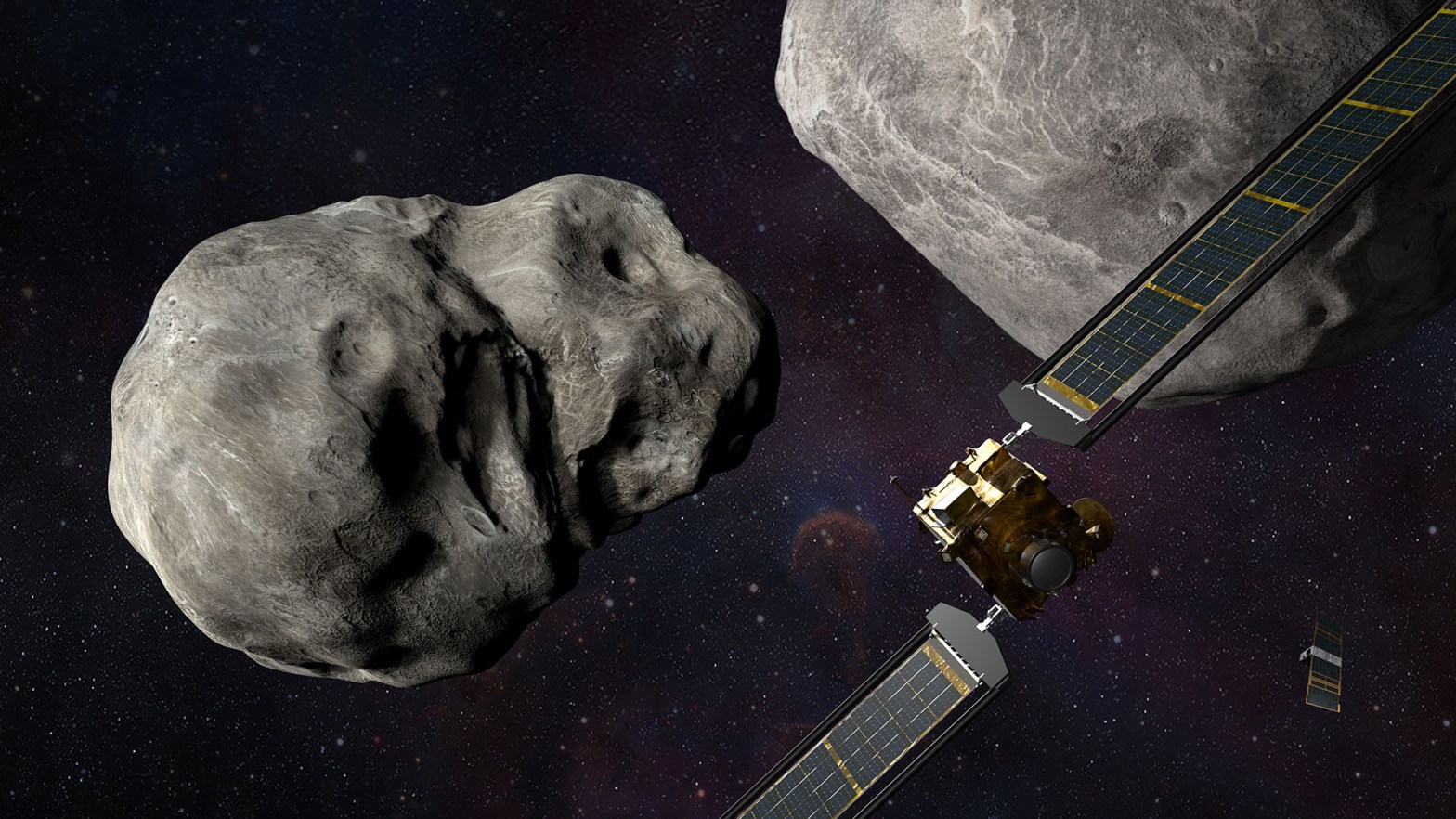
This week was a great success for NASA’s Dart mission. The objective of slamming the DART spacecraft into the asteroid moon Dimorphos (or as YouTuber Scott Manley likes to call it – DiddyMoon) was a total success. Not just a success but a somewhat spectacular one as well.

Asteroid Defence is a go!

DART marks the first test of planetary defence. One of our biggest existential threats is that of an asteroid impacting the Earth and forever changing things for the worse. Just ask any dinosaur. Wait, you can’t … because of an asteroid! The threat of an asteroid’s impact is a real thing.

The DART mission attempts to prove that it’s possible to divert the course of a space rock by slamming a smaller mass (such as a satellite) into an asteroid at speed.

The impact happened, soon we’ll know the degree of change in the orbit of Dimorphos. We’ll then have a baseline for future asteroid defence calculations.

What Actually Happened?

This is from NASA showing the moment of impact from DARTs point of view. Actual Press Release

Why Get Excited?

Because it’s a message of hope. The DART mission demonstrates that difficult tasks as possible tasks. It opens up the possibility of beating an unbeatable existential threat, and there is hope in that.

It’s hope that is big takeaway.

We live in a time of climatic change, war and economic chaos. It would be so easy to give up and say “the future looks awful; lets give up”. Then along comes a space mission chock full of hope, and the suggestion that we can beat a threat of the ages.

Doing something big, extreme and complex enough to make you think all can be overcome is not the sole reserve of space. But it is something that space travel has always been very good at. Think of the euphoria that surrounded the first man on the moon.

Of course, the first man on the moon was the product of the cold war space race. Something that eventually ground to a halt. We’re in a new space race now and its diverse. Full on national interests yes, military also and private organisations doing until now something that was the preserve of super powers. I’m hoping that means we’ll see more that helps us all understand that we can overcome.

Space travel may not be the rosy futuristic thing that SF promised us. But it could still help everyone.

The Inner Solar System

It’s time to create outline views of the planets in the fictional future solar system. After thousands of years of manned space flight, complete with significant ups and downs, it is quite diverse.

I’ll avoid mentioning space stations, captured comets, navigable asteroids and anything else that is permanently part of the inner system but not a planet.

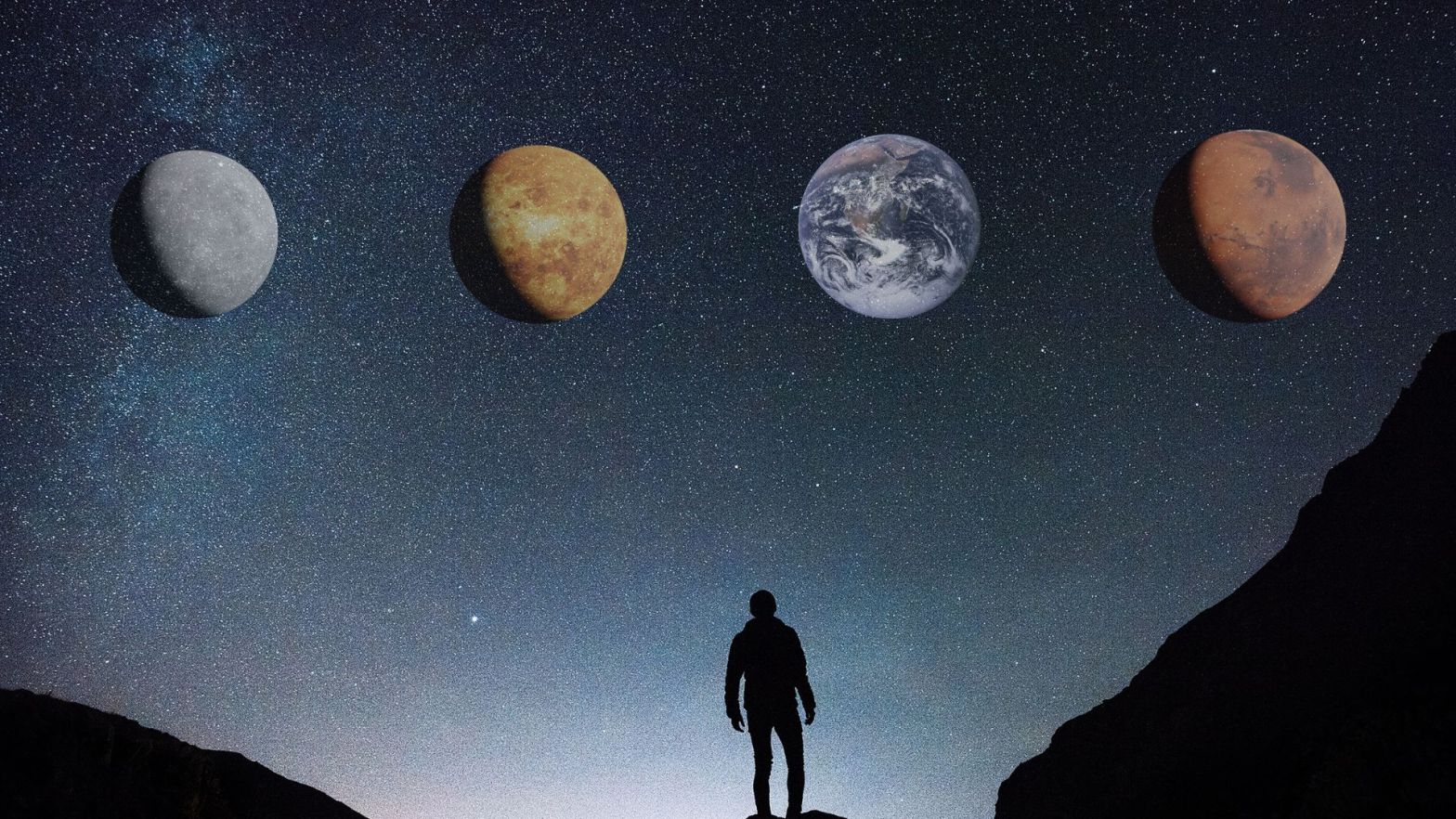
So that just leaves us the four big places. Mercury, Venus, Earth and Mars.

Mercury

The closest world to the Sun. Mercury is small, hot and, from a distance, bright. It’s a challenging place to colonise, but people have made it home. However, it does orbit the Sun in only 88 days. Coupled with very low gravity and an almost non-existent atmosphere, Mercury was an interesting place from a launching outward point of view.

Records suggest that the early colonisation of Mercury was all about science and mineral exploitation, but over time, that changed. The vast temperature range of Mercury’s surface (-180C to +450C) had always made being on Mercury challenging. Even with superlight construction from nanoengineering. People went deeper into the planet, and they became more insular. A culture based on sending small light sailed craft outward to trade ideas, science and pop culture grew and combined with the concept of we don’t want anyone else here. Today you may listen to Mercury Rock but have almost no chance of getting an official permit to visit.

Of course, plenty of people are also offering maps to Mercury’s lost old mines. Those are probably best avoided.

Venus

Venus was and still is the hottest planet in the solar system, with a crushing atmosphere and clouds of sulphuric acid. The age of super strong nanomaterials made the exploration of Venus possible, but life on the ground was never a great idea. Life in the clouds, though, was something else. Orbital research structures gave way to vast dirigibles. Filled not with helium or hydrogen but with a pure vacuum. Made from advanced materials that could handle the pressure difference between outside and inside the balloons. However, these never went near the surface. Instead, floating tens of kilometres up in the air where the pressure outside was near that of Earth.

Over time these turned into vast cities. Always taking the form of massive balloon shapes, with habitat areas not slung underneath but blistering out from the surface.

Venus is one of three planets in the solar System to have life that goes beyond human colonisation. It started natively with processes creating the markers for life. At some point that was enhanced and species to live in the clouds were evolved. It made living in what were effectively floating spaceships easier, that ability to look outside and see something flying by.

Venus even at altitude is not a planet with native water. Most life depends on reservoirs built for human cities. Water is rare and valuable making the flying life of Venus voracious hunters of water. Beware of the water hunters of Venus.

Earth

The world of a thousand nations, and that’s just on the ground. Take into account orbital and subsea nations, and the list gets much longer. Just about every type of government can be found in, on and around the Earth. In terms of size some of these countries are little more than city states and others go on for as long as the eye can see. Earth is the home of humanity and the most diverse place in the solar system.

Making sense of what would otherwise be chaos is the Common Trade and Defence Authority. The history of which goes back more than 2000 years, emerging as a force for cohesion sometime during one of the dark ages. Known to the people of Earth as simply the Authority or to those else where as the Commonality it provides a singular point of reference for all trade with the people of Earth. It also runs the biggest army and one of hte largest fleets of warships. Don’t think of the Common Trade and Defence Authority as a government. It exists as a framework for cooperation and united action. Major decisions are taken by the Council. Nine elected representatives each put in place by elections held on the ground. The nine are not Prime Ministers or Presidents. Think instead of judges who will rule and debate based on law before voting on a final decision.

Mars

When it was time to spread to the other planets, Mars was the first to be colonised. By the simple virtue that it was the easiest to survive on. It became the target for just about every scheme and strategy for living on an inhospitable to be tried. There are domed cities, underground cities, areas of limited terraforming and little Earths. Its all there.

Also there are monsters. Trying to create organisms and engineered people that could survive not under native Martian conditions but under the conditions where engineering created more survivable zones had variable results. Some of these became true native dwellers and some of these are truly terrifying.

Mars is a diverse and complex place. Lots of different ways of living. Lots of different relationships with the rest of the Solar System and of course people and animals that are truly strange and Martian.

Mars might just be the strangest place in the Solar System.

To Finish Off

The Solar System of Solar Stories is a very complex place. It’s probably impossible to describe everything in a digestible number of words. This is part of the answer to that problem. A framework that, whilst general, gives a starting point for individual customisation. It’s a macro view of things at a set point in time. Other histories and detailed descriptions and be written for unique locations and timelines. But this is the overview to work from. At least for the planets of the inner solar system.

Chatting about Photographs

And now a break for something different

It’s true to say that I like photography. It’s also true that I like photographing LARP Events. I’m getting back into blogging about the images and galleries I create. None of that fits in here. So instead, I place these thoughts where my photos live.

Should you want to take a look at the latest entry, you’ll find it on this link

https://www.robdavies.photos/blog/improving-on-house-style/

Coming Up Next

I’m working on describing the planets of the Solar System for Solar Stories. They will be different from how we see them today and should be a rich playground for adventure.

Empires – Someone’s Way of Doing Things

A solar system set in a distant time does not mean a utopia place where all problems are solved. Far from it, as the basis for Solar Stories is people everywhere. People everywhere means competition and politics everywhere.

We’re also not talking about magically fast travel. A quick trip between planets may take weeks, and moving across the solar system may put you into months of travel. Solar Stories is not like 21st century Earth. It’s far more like the age of sail, only much bigger. This combination of travel time and immense size creates opportunities, and people always take opportunities. So whilst there are some tremendous large-scale belief systems and political structures, a lot of space is filled with different ways of doing things. Let’s take a look at one.

The Empire of Darlor

Six hundred or so years ago, Fabien Darlor was a successful salvager. His family’s ship, ‘The Wake of the Great’, had been in operation for over a century, and the Darlors spent most of their time finding mined-out asteroids and dismantling the abandoned mines and settlements. Now and then, they’d score a pile of processed and abandoned ingots of nickel or similar metal.

That was until they found asteroid “267654-876-9875”. Instead of the usual fit for scrap-only leftovers, it contained a nearly functional mining outpost complete with a working dock. Once upon a time, someone had taken the time to mothball this place. Now they were gone; better still, records of the original owners did not exist.

Fabien claimed the salvage and started the process of inhabiting the asteroid. His family set about the renovation, and Fabien declared himself king.

More families

One family on an asteroid does not an empire make. So Fabien’s next move was to make his discovery a freeport and offered the first families to join his kingdom shares in its operations (and, of course, noble titles).

More Asteroids

One asteroid is good, and more asteroids are better. So as time went on, Darlor moved minor nearby asteroids into complimentary close orbits of his kingdom. He had more territory and more resources.

Trial by Combat

Going from an acquirer of resources to a recognisable political force is never easy. Knowing this, Darlor started to build a fleet. He started small by arming existing vessels with an explicit licence to operate on behalf of his fledgling empire. Although little more than space privateers, these were a start.

The next step was to use this force to establish the empire as a military and political power. For some time, Oleksland, a nearby and vibrant colony, had been refusing good trade terms of Darlor. Instead of further negotiation, Darlor ordered the seizing of the Oleksland docks and blockaded its traffic. The situation escalated quickly and turned bloody. The result was the seizing of Oleksland.

The Style of an Empire

What started as a place to live and run a business expanded into a force in its own right. Over the following centuries, the Empire of Darlor expanded. Used Fabien’s methods and lived up to a series of maxims.

  • A motivated aristocracy is not necessarily a bad thing. Give titles for commitment.
  • Responsibility matters – all actions should have consequences.
  • Negotiate first, but never be afraid of hard-hitting action.
  • Never look for more as a means in itself. Expansion must have a purpose.

The Key to Solar Stories Thinking

This single empire is a key to thinking about the places in Solar Stories. Everything came from the past and evolved uniquely, driven by the personalities involved. The Empire of Darlor started with a forgotten place and a man looking for a way to get others to help pay for a dream. The result was an aristocracy backed up pirates living among asteroids and space stations.